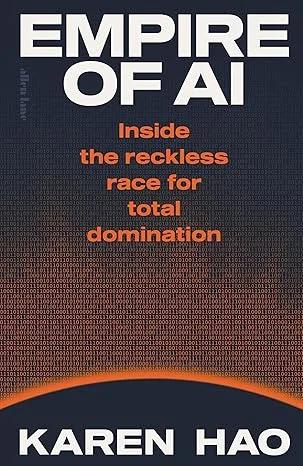
Empire of AI: A Book Written Too Early
Karen Hao's Empire of AI attempts something ambitious: capturing the OpenAI story while it's still being written. The result is a mixed bag, part insightful journalism, part premature verdict.
The Timing Problem
Unlike Hatching Twitter, which benefited from hindsight after the dust had settled, this book tries to freeze a story that is still unfolding. OpenAI's trajectory is far from complete, and many of the incidents presented as defining moments will likely end up as footnotes in a much longer history.
Even the title hints at an ambition to echo the moral outrage of Empire of Pain, but the comparison doesn't quite land. There simply isn't that level of wrongdoing or consequence here, at least not yet.
What Works
Where the book succeeds is in its reporting on the people and internal dynamics behind OpenAI, and the early history of its flagship products. That material is genuinely interesting. Hao has clearly done her homework on the personalities, power struggles, and pivotal decisions that shaped the company.
She also raises valid concerns. Some OpenAI behaviors are questionable, and the treatment of outsourced content moderators, particularly Scale AI workers in Kenya exposed to explicit material, is rightly highlighted as unacceptable.
Where It Falls Short
However, these issues aren't unique to AI, nor to OpenAI. The book's attempt to frame this as a modern form of colonialism feels strained and overextended. It's a serious topic that deserves serious treatment, but stretching the comparison dilutes rather than strengthens the argument.
The narrative also already feels dated. Published only months ago, it assumes OpenAI's dominance at a time when newer models are rapidly overtaking it. This undercuts the book's more alarmist tone. What felt urgent at the time of writing now reads as one snapshot in a rapidly changing landscape.
The Verdict
3 out of 5 stars.
Worth reading for background and color on OpenAI's origins and internal culture. The reporting on people and product history is solid. But the book is uneven, and large sections can be safely skimmed if you're already familiar with the AI industry discourse.
If you're looking for a definitive account of OpenAI's impact on the world, you'll need to wait. That book hasn't been written yet, because the story isn't over.