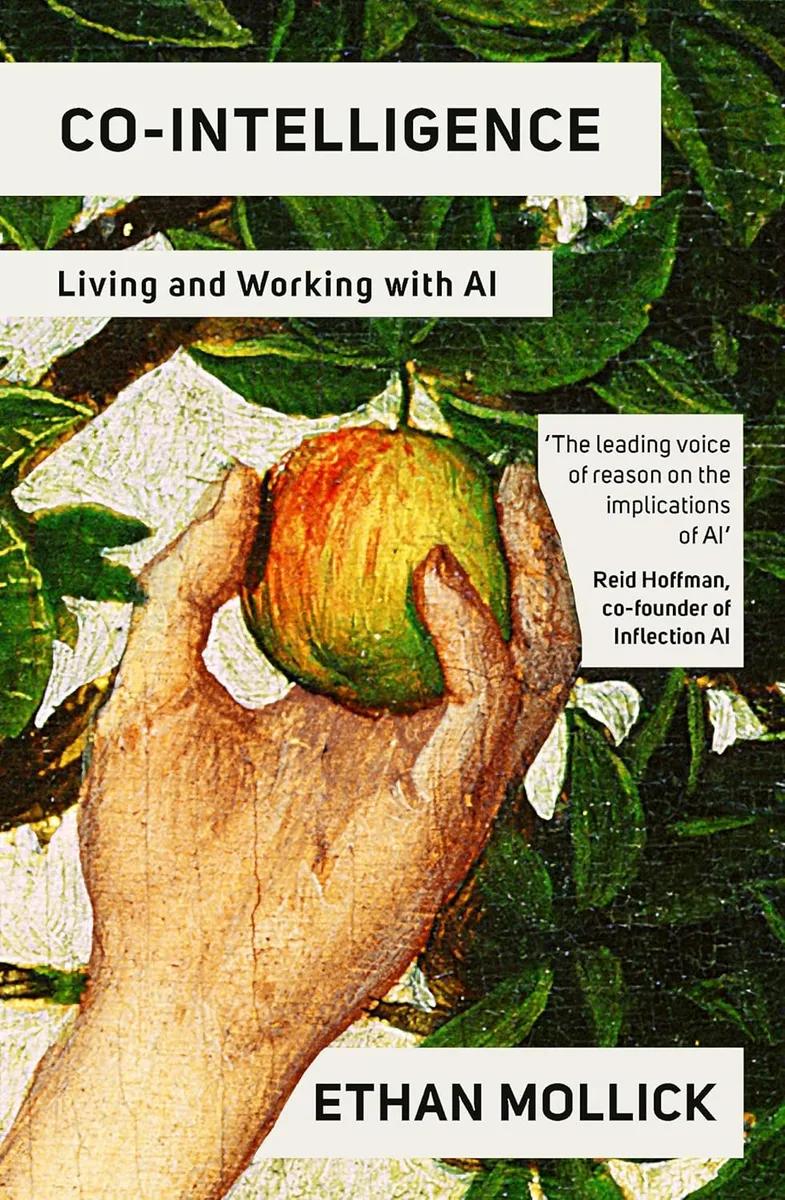
Co-Intelligence: A Practical Guide to Working With AI
If you've been curious about AI but unsure where to start, Co-Intelligence by Ethan Mollick might be exactly what you need. It's become one of the most recommended books on AI, and after reading it, I can see why.
AI as Collaborator rather than tool
The book's central premise is straightforward but important: large language models work best when treated as collaborators rather than simple tools. Mollick, a Wharton professor who has been studying AI's impact on work and education, brings academic rigour without the academic stuffiness.
What makes the book genuinely useful is its structure. Rather than diving into technical details or getting lost in speculation about the future, Mollick frames AI through practical roles: tutor, co-worker, assistant, coach. Each role comes with concrete prompts and example responses that you can adapt immediately.
The Insights That Stuck With Me
Several observations in the book made me pause and think. Perhaps the most compelling is evidence suggesting that lower performers often benefit more from LLMs than top performers. This positions AI not just as a productivity boost for experts, but as an equaliser, giving everyone access to capabilities that were previously reserved for specialists.
The book is also honest about current limitations while remaining optimistic about potential. At times the enthusiasm for LLMs feels a little breathless, but nothing struck me as overstated or misleading. Mollick clearly believes in this technology, but he backs his claims with data and real-world examples.
Who Should Read This?
If you're already hands-on with AI, using it daily for work or creative projects, you probably won't find much that's new. I was already following most of the advice in the book, so it felt more like confirmation than revelation. I still picked up a few useful tips and some thought-provoking perspective on how capable these systems already are.
But it's a great book for someone looking for an an on-ramp:
- People who have heard about ChatGPT but haven't really used it
- Managers trying to understand how AI might affect their teams
- Anyone who wants practical ideas without needing to go deep into any single domain
The writing is clear and accessible, avoiding both hype and doom. Mollick treats readers as intelligent adults who can form their own opinions when given good information.
For a hands-on example of AI as collaborator, see My Claude Code Workflow. For a deeper look at what my own AI collaboration has produced, see Machines That Build Themselves.